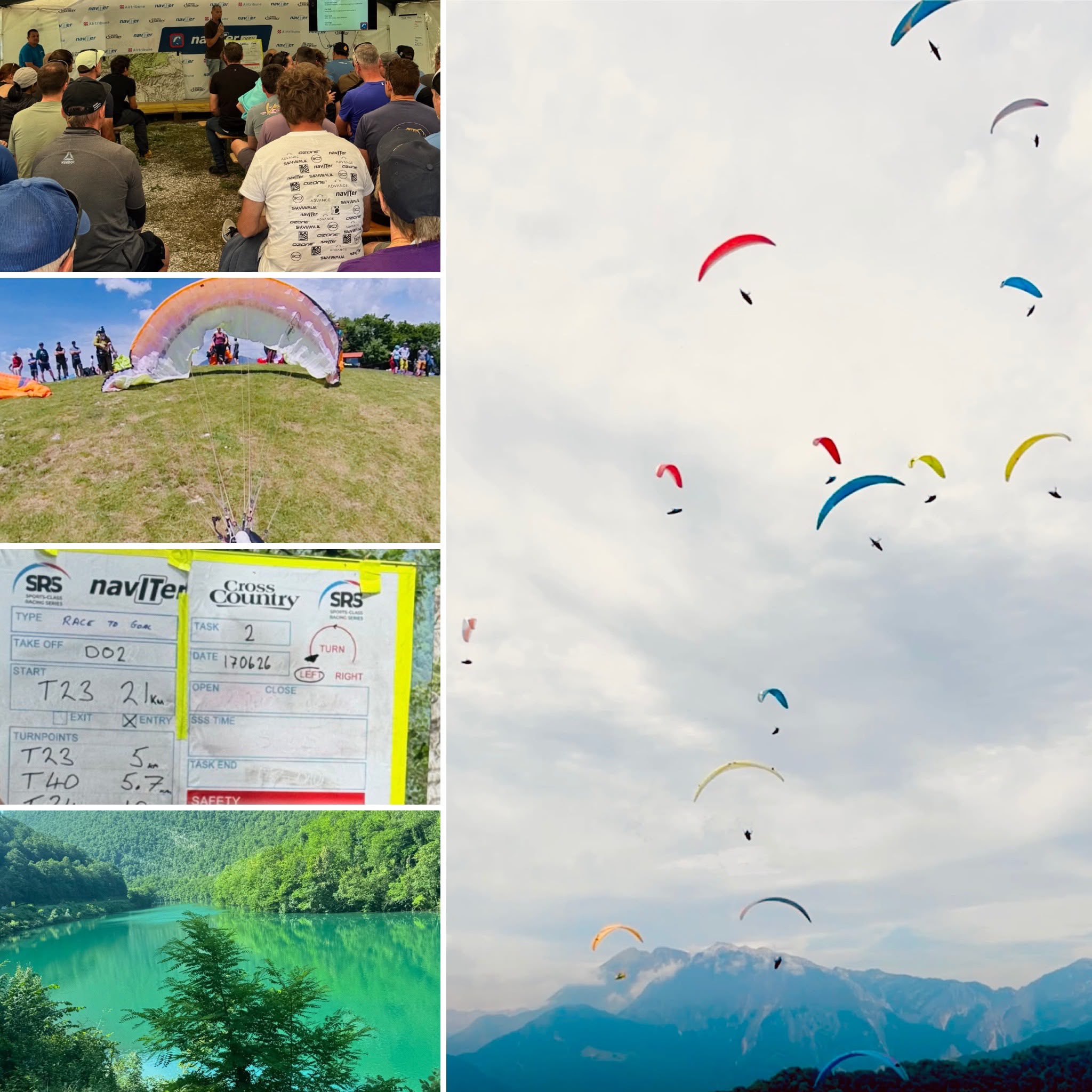
UP Team Pilot Benno Schmidt competed in Tolmin, Slovenia with the TRANGO X (EN/LTF C), even though competitions weren't really his thing. Until now.
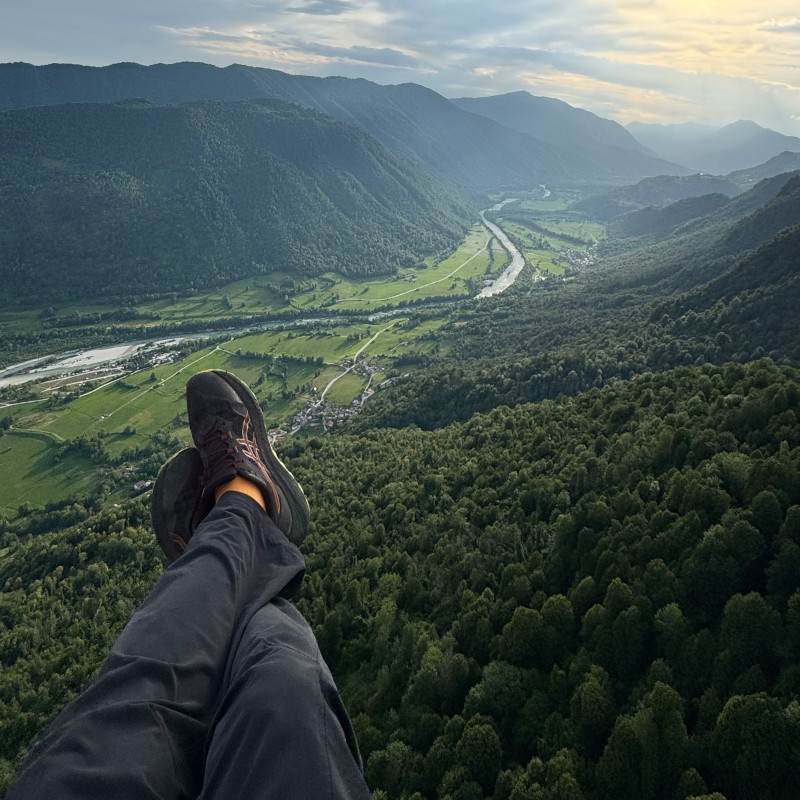
He says: "I have to admit something. I'm not really a big fan of competitions. I love free flying because it's just that - free. My route. My timing. My plan for the day. Competitions often replace exactly that with bus rides, briefings, launch windows, and set tasks - even when the air has long been calling for a great XC day. So I didn’t arrive in Slovenia as a converted race pilot. More like curious, but skeptical. Then the Soča Valley did what it does: glistening turquoise, opening up between steep green mountains, and making every decision suddenly seem important. This week changed something for me.
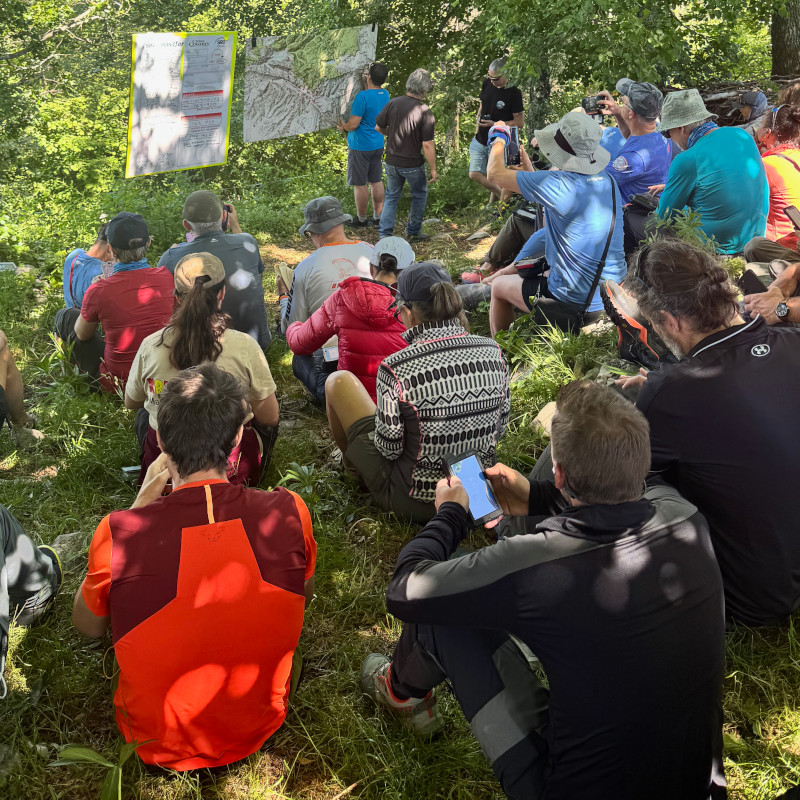
The usual competition routine was in place: registration, pilots from all over, maps, task boards, and the mandatory safety briefing. But this time, none of it bothered me. The weather was perfect, the organization was top-notch, and the flying was challenging in just the right way. After the first two tasks, I was in 38th place in Task 1, 38th place in Task 2, and 32nd overall. That surprised me more than it probably should have. I can’t keep up with pilots like Andreas Malecki or Thomas Frances, who ended up winning the competition. They fly PWCs and operate at a level where I have no illusions about my abilities.
But I’ve learned that when I really push myself, I’m faster than I often give myself credit for. Time and again, I flew alongside the same strong pilots and crossed the finish line just a few minutes after them - or right alongside them. That was a subtle but quite effective boost to my self-confidence. The most important lessons, however, had little to do with the speed bar. The biggest insight was simple: The fastest line is more important than just going full throttle. The biggest time differences - sometimes half an hour - weren’t caused by a few percent more speed, but by taking the better route. On Day 4, you could see this perfectly in the replay. After the 1:30 p.m. start, the group that consistently took the mountain line was significantly faster than the pilots who stayed lower in the valley.
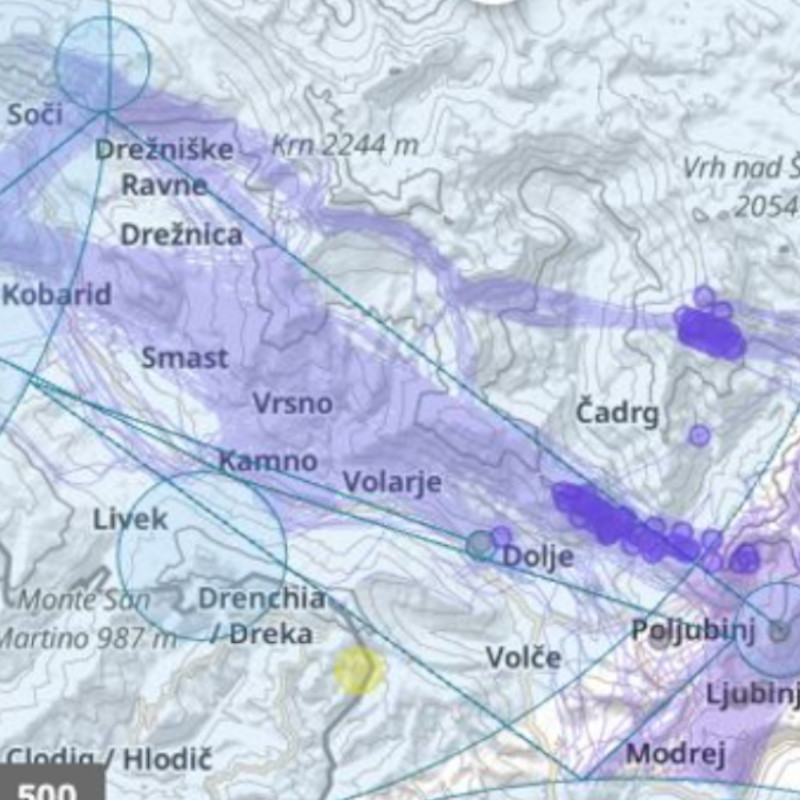
Source: XCStats-Replay
On my own, I would often have hesitated in the face of such a high line. In the competition group, I saw how well it can work. Maybe I should let it intimidate me less in the future. The second lesson was even more practical: When conditions are strong, you don’t have to stop at every ridge to catch lift. Keep flying. Straight ahead. Fewer thermals. Way fewer. I lose time if I climb out of caution, even though the line is actually carrying me. Not every day was easy. Some tasks were really tricky. Task 1 started off strong and then suddenly fizzled out: shadows, hardly any lift, and soon half the field was already on the ground. In Task 2, only three pilots made it to the goal. These weren’t just results - they were lessons in weather. The remaining tasks, however, brought enough lift so that we could race, try out different lines, and learn from each other.
One of the best insights concerned my glider. I flew the TRANGO X - a 2.5-liner - almost exclusively among two-liners and never felt like I was at a real performance disadvantage. The top pilots were faster because they made better decisions, chose better lines, flew with more confidence, and simply had more racing experience. Not because my glider couldn’t keep up. The TRANGO X has an absurdly short total line length - even shorter than some two-liners. In normal race conditions, I barely felt any difference, not even compared to gliders like the TORRE. Only in really choppy air did the two-liners glide away a bit more efficiently.
Would I prefer the smoother rear riser steering of a 2-liner? Of course. Am I open to trying new gear? Of course. But for XC flying - which I usually do alone or with friends - this week served as a good reminder: My current glider doesn’t hold me back. By the way, my favorite race moment was probably also my dumbest. After the last turn of a task, I didn’t realize that I actually just had to glide to the finish. I was completely in XC mode and kept turning in a thermal like on autopilot. Seven minutes later, I finally looked properly at the instrument and realized what was going on. I flew into the finish with a glide-to-goal ratio of 0.3:1. Not elegant, but definitely memorable. Still, the day ended well: 43rd at the goal and 38th overall out of 117 pilots. I’ll take that.
Besides the race, there was everything I love about flying beyond the rankings: a hike in the rain, conversations with friends at Camp Gabrje, swimming in the ice-cold Soča - and, of course, more hike-and-fly than a normal person would probably choose after a full day in a harness. Most evenings, I went on one of those little hike-and-fly excursions with my KAILASH. It was precisely these flights that mattered, because they brought the week back to where it all begins for me: not with points, not with rankings, but with the feeling of being in the air by my own choice.
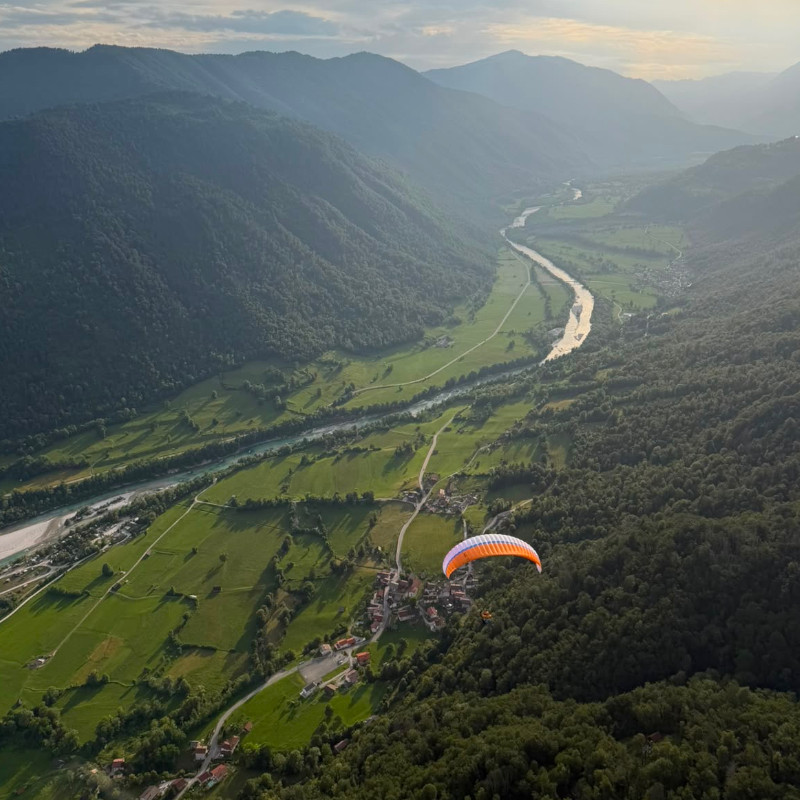
Tip: The hike from Camp Gabrje to Vodel is really beautiful. About 800 meters of elevation gain - enough to feel it in your legs, but not so much that it ruins your evening. That’s probably exactly why NAVITER Open worked for me. It didn’t replace free flying - it sharpened it. It showed me better lines, better habits, and a faster version of myself - but still left room for friends, bad jokes, evening hikes, and the kind of flying that doesn’t require a task committee. I’m still not sure if I’m a competitive pilot by nature. But this week in Tolmin was the first time I’ve really enjoyed racing. I learned a lot, flew better than I expected, and headed home with more confidence than I’d brought with me.
Thanks to NAVITER for the competition, to all the pilots with whom I got to share the sky and retrieves, and to UP for supporting these adventures. Whether racing between two-liners, scraping through the shade, or gliding leisurely in the evening light over the Soča Valley: it felt good to have gear above me that I trust."